

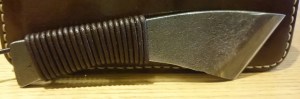
Most woodcarving knives, not to say most knives generally, have a symmetry of grind. There are two notable exceptions to this, one of which, the Kiridashi is well known. This blade style is simple and straightforward and is basically chisel ground. The flat face is toward the user with the bevel on the outside and the flat face towards the user. Kiridashi knives are the universal craft knife of Japan and are a very well known type of blade.
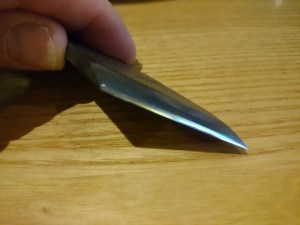
The much less well known blade type is the Yakut knife which also has a bevel on one side and a flat face on the other. The big difference is that the flat face is the one on the outside, facing away from the user and that it is convex rather than flat with an often deep recess being forged into the blade. As they are traditionally used in Siberia where it tends to be a tad chilly in the winter these knives tend to have larger hafts which are easier to use with gloves. The haft shape is usually relatively simple and is oval in cross section and fairly straight. The blade is almost always a hidden tang style but unlike many the tang tapers gradually from the blade giving a thicker and stronger tang. One suggestion is that this shape of blade evolved from blades originally fashioned from split bones where there would naturally be a convex side and a convex side with the edges sharpened on the flat side. Rather like an extreme form of hollow grind. One aspect of a Yakut blade is that it is easy to maintain a perfect angle for sharpening as it is simply laid flat on the flat side and drawn across the stone.
I love to try different blade shapes and as soon as I first read about the Yakut knife I wanted to try one for carving. My first attempt was a short blade and was quite wide with a lot of belly in it’s shape and it worked reasonably well but I needed to improve on the blade shape, length and handle shape, or so I thought. So, this is my second version of the traditional Yakut knife which is native to Siberia. I have of course opted for a slight change in the shape of the blade to suit my preferences. I would probably say it is more of a fusion blade, a cross between a Yakut and a Sloyd. Most Yakut Blades have a deep belly and are less pointed than mine.
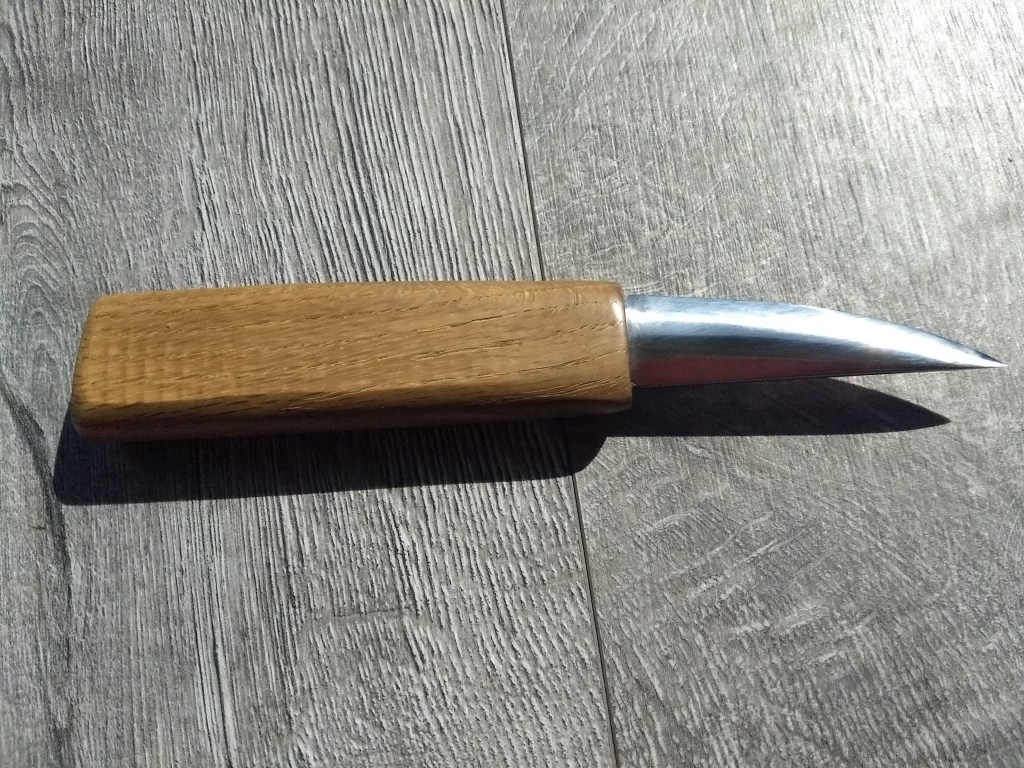
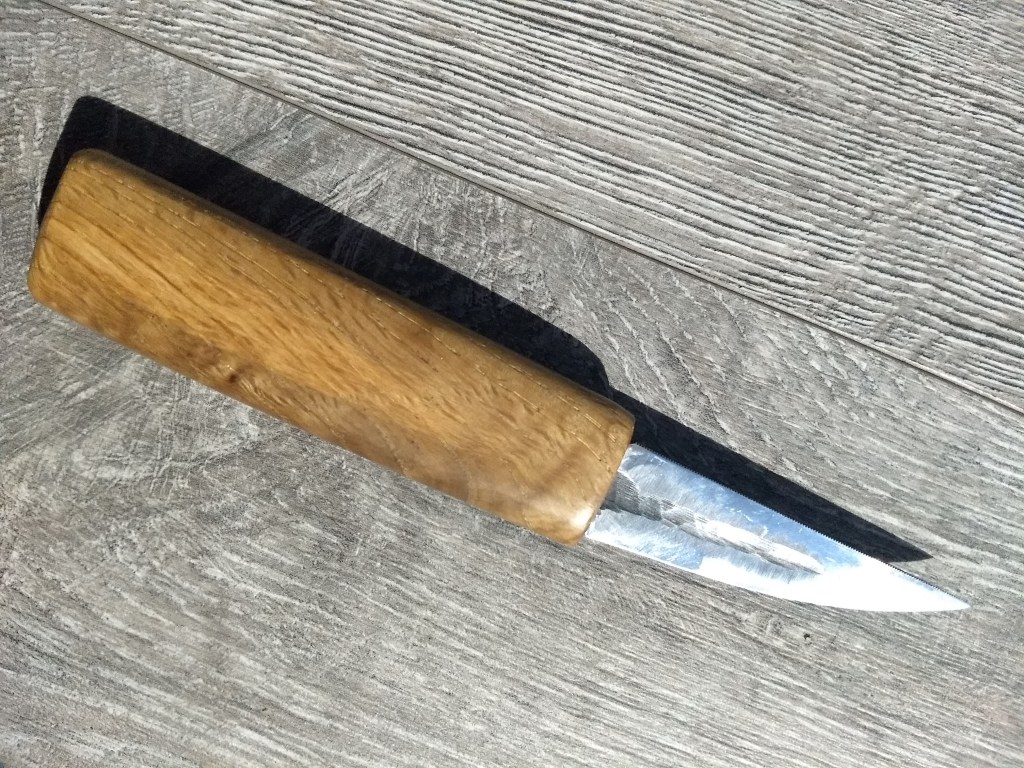
This blade shape excels at cuts away from the body. The convex surface of the inner face of the blade allows it to make sweeping clean cuts away from the user without any of the chatter that can take place with blades such as sloyds. The flat outer face means it is perfect for planing pull-cuts on convex surfaces, not so good for convex cuts towards the user however where it exaggerates the kind of blade chatter that a sloyd blade gives. Since making this knife however I have come to the conclusion that it is just too long for most of my carving and I have made a repeat of my original one which unfortunately had an accident and broke. This is my new Yakut and I must say it is my absolute “go-to” knife for rapid stock removal and for smoothing convex surfaces.
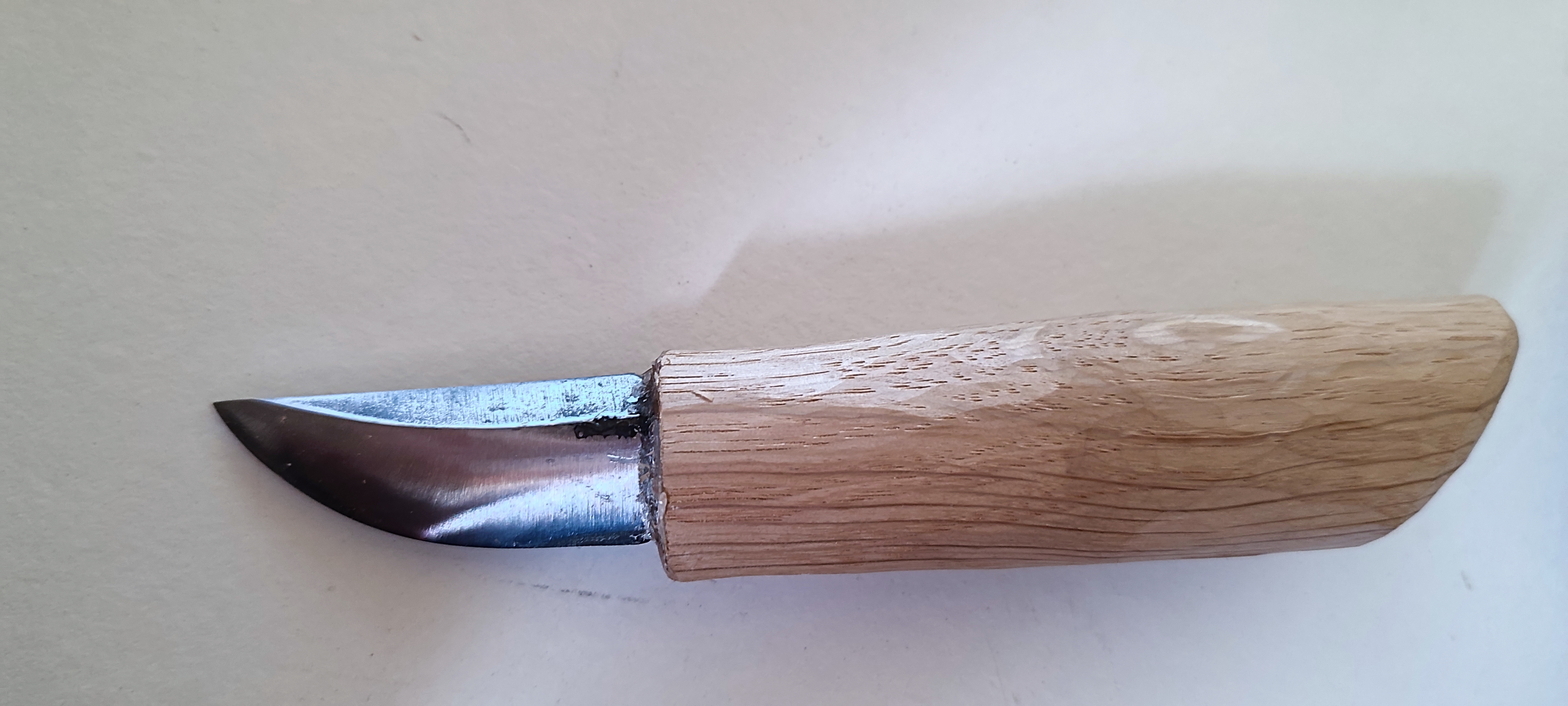
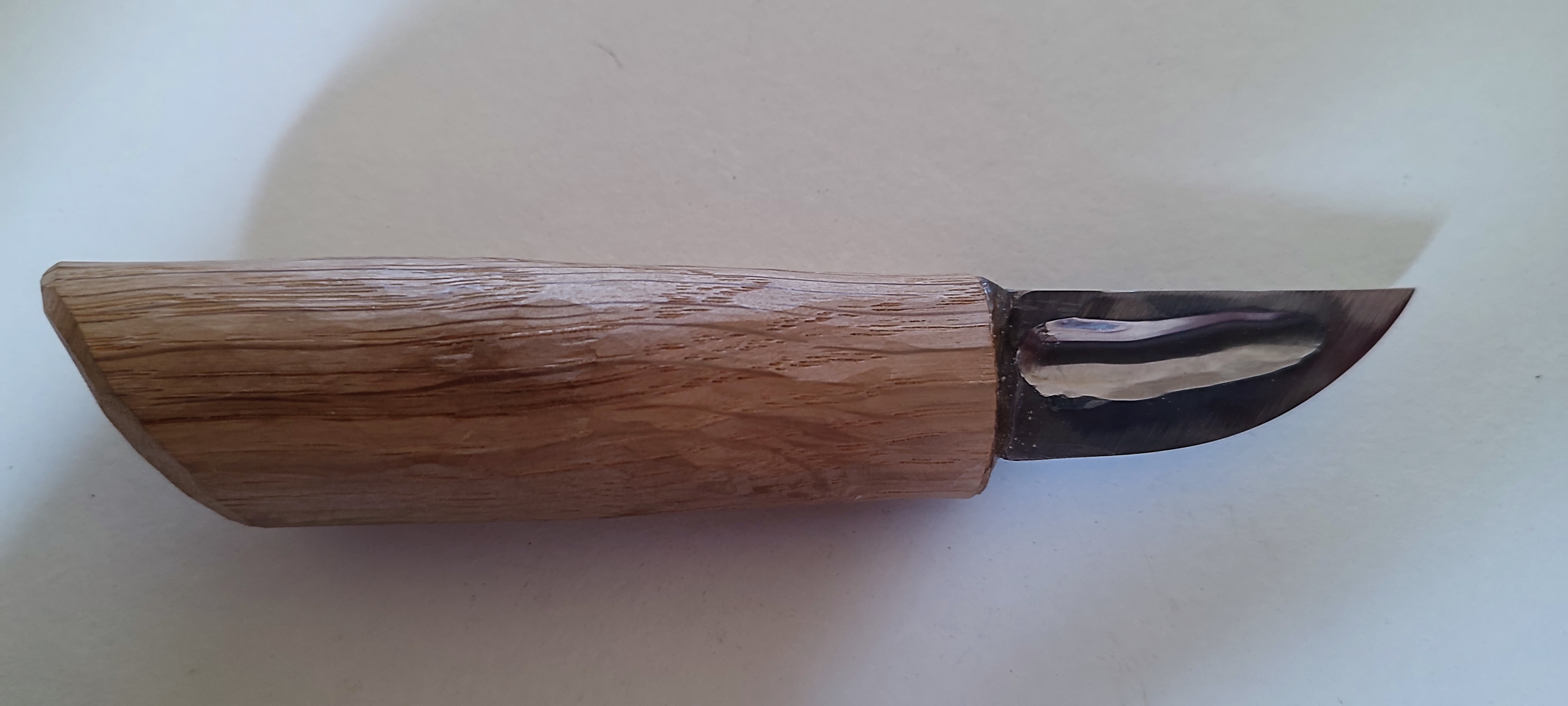
Although it is limited in terms of the variety of cuts you can use it for this knife is one that I am just drawn back to again and again. I love the way it “just works” for cuts made away from the body, it never digs in and just sweeps itself out of a cut. The deep belly on the blade means that it also works really well for push cuts, a bit like using it as a chisel. Th comparatively short blade length, approx 50mm, means I can work closer to the tip without it feeling as if I am only gripping the blade. It has a fairly rough Oak haft, I tend to prefer a knife haft to be a little on the rough side so it is easier to grip. I’ve always found that really smooth polished handles don’t feel so good in my hand.
This blade is a re-purposed old bevel chisel and is extremely thick at it’s thickest but that doesn’t cause any problems due to the shallow convex grind and flat back, the actual included angle is fairly shallow at around 22 degrees. and it’s thickness means it is one tough little blade.
 Carved by Trev