

It’s odd how internal discussion, and by that I mean conversation in my head leads to a sub-concious change in direction. This post started out as a look at specif blade shapes and how they work, or not, for me. Ah well, that’s yet another idea for a post.
I’ve talked about how I sharpen knives, I thought I’d start talking about blade shape or, profile.
To do that properly we need to discuss briefly the different styles of carving and the kind of wood and characteristic cuts they use. Believe it or not this actually makes a lot of difference to the blade profile used.
Whittling, a much maligned passtime bringing forth incorrect images of tobaccow chewing old men sitting on rocking chairs wearing dungarees. My own definition of this style, although not referring to who whittles is not overly complimentary and will almost certainly anger some. I tend to think of whittling and spooncarving as very similar but due to the wood used and subjects carved they use very different knives and styles. Whittlings falls into the category of “sketching in wood”. Often coarse in nature and simplistic in terms of design, items that are whittled tend be quick carvings, often full of character and demanding great skill, but somewhat lacking in fine detail. There are a lot of folk out there who paint their whittlings. Lime (basswood, Linden) is the preferred wood for whittling, mainly because it cuts easily and is actually very soft. With a sharp knife a good sized chunk of wood can be rendered down to quite a small figure very quickly. This style of carving is very popular in the US. This kind of carving often involves quite deep cuts and whittlers often use a short, slim wharncliffe style blade. These are two classic whittling knives.
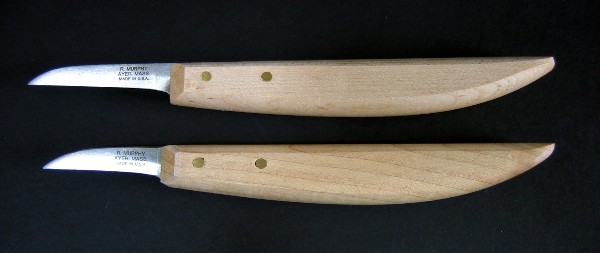
Typically their blades are only about an inch and a half (40mm) long.
Spooncarving, well, a very different blade preference now. Greenwood is softer and easier to cut but demands sharp tools to get a good finish. Long sweeping, almost planing cuts, very seldom is the tip of the blade even needed for spoons. A long, sweeping blade such as this one,
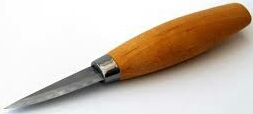
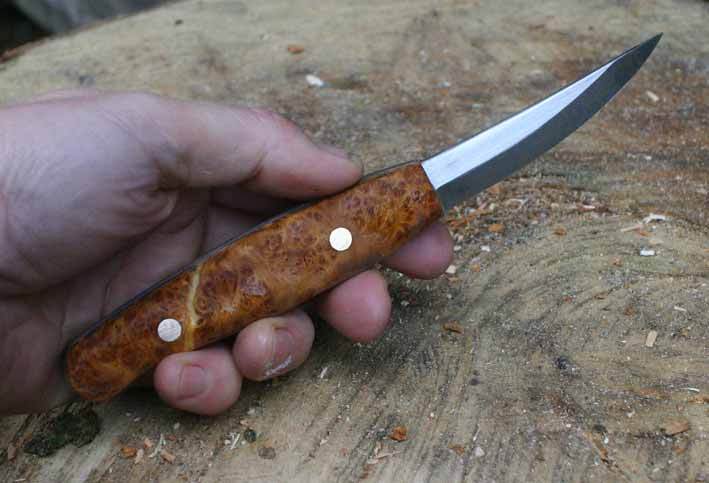
Which can be used for big sweeping cuts. Often involving the quick removal of quite a lot of wood. There are some very nice custom models of this style as well.
Finally we come to the style which is, in terms of tools, much less easy to categorise. I suppose the easiest way to describe it is to describe the end result. Small, detailed, netsuke like carvings, usually in hard woods like Box and ebony. As often as not it is small gouges or even dental picks that are used here. The knife still has it’s place though, it isn’t for nothing that the humble knife has survived so many millenia in the same basic design as when our ancesters first tied a piece of flint into the end of a stick with willow bark or sinew. It remains the single most flexible and capable tool we have ever developed.
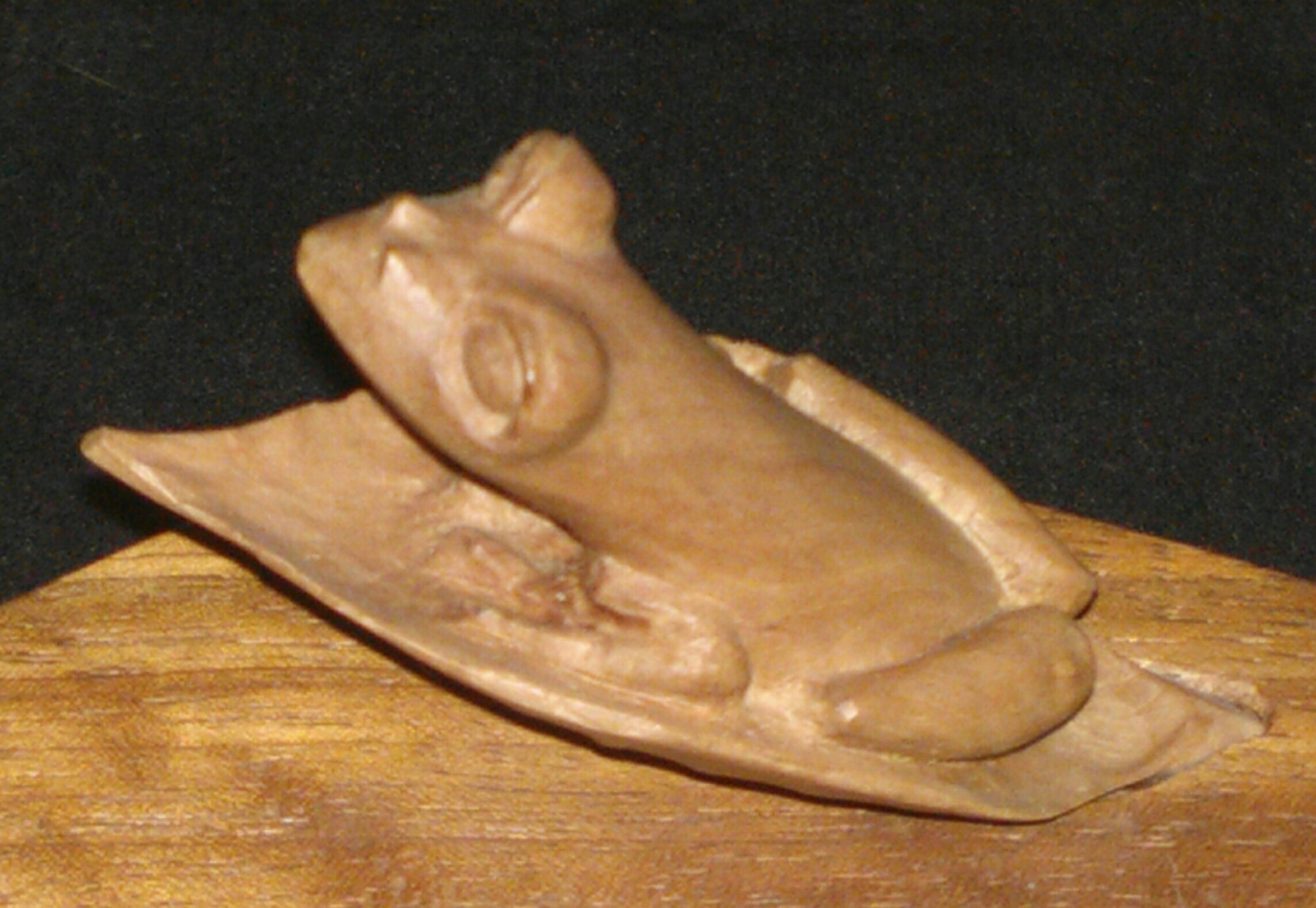
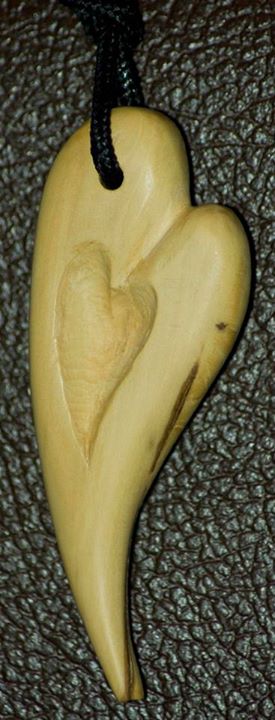
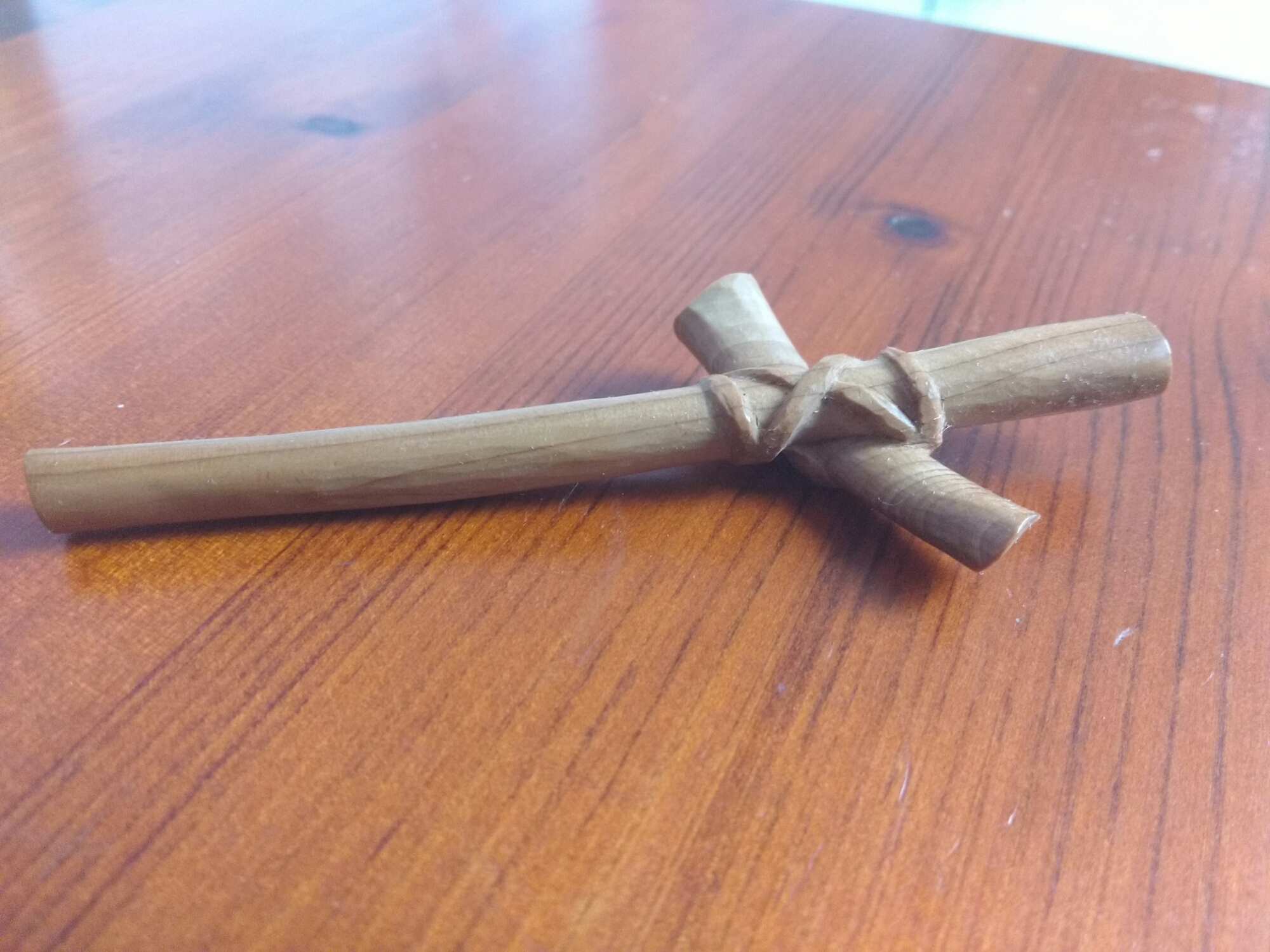
Anyway this kind of carving requires small, precise, very tightly controlled carving strokes. Often taking off such tiny amounts of wood that you would hardly notice. I can carve for a couple of hours, make enormous progress with the piece but create less than a teaspoonfull of waste. For this job a tiny blade is a good blade.
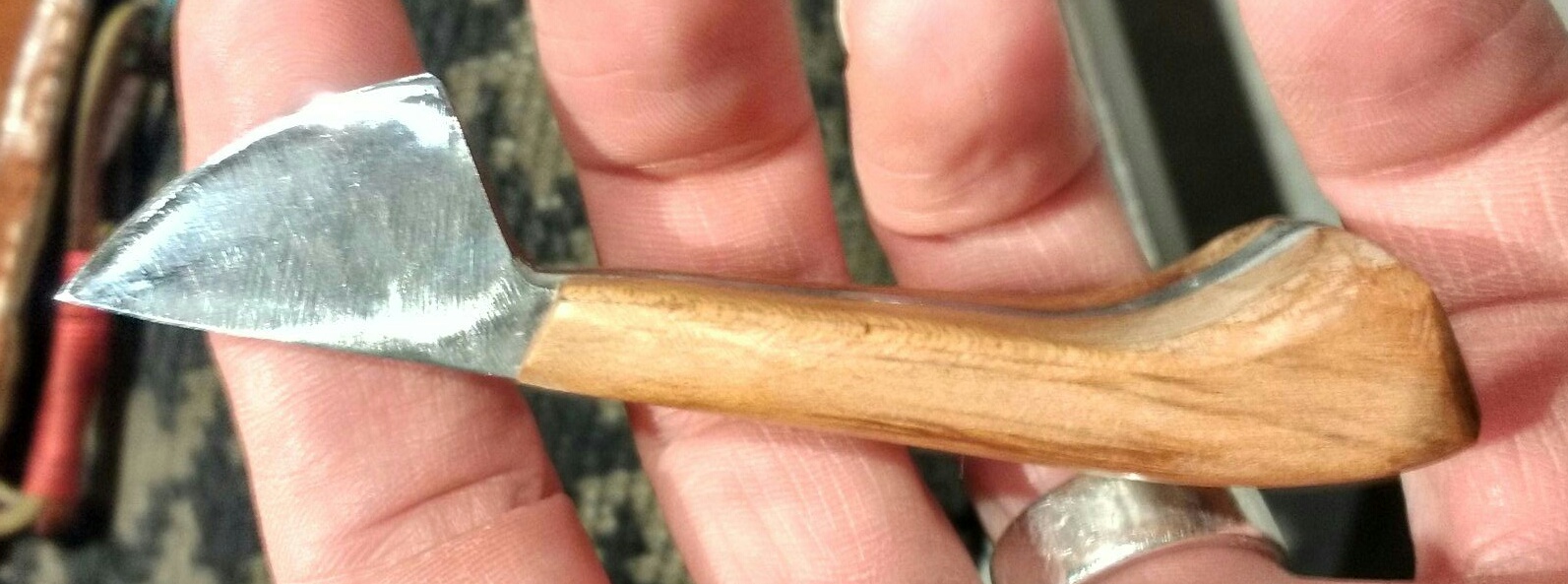
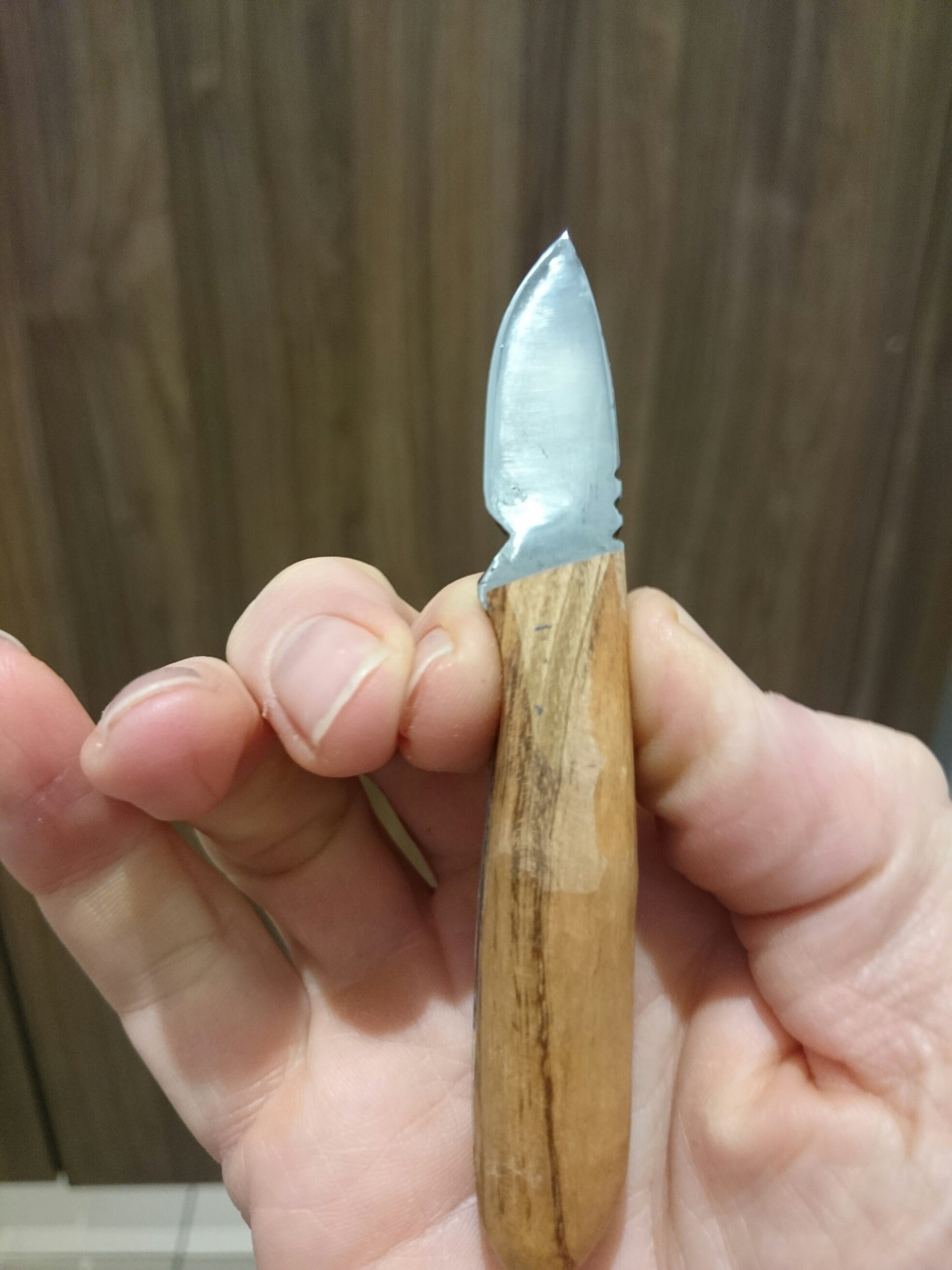
 Carved by Trev